Understand Your Vision
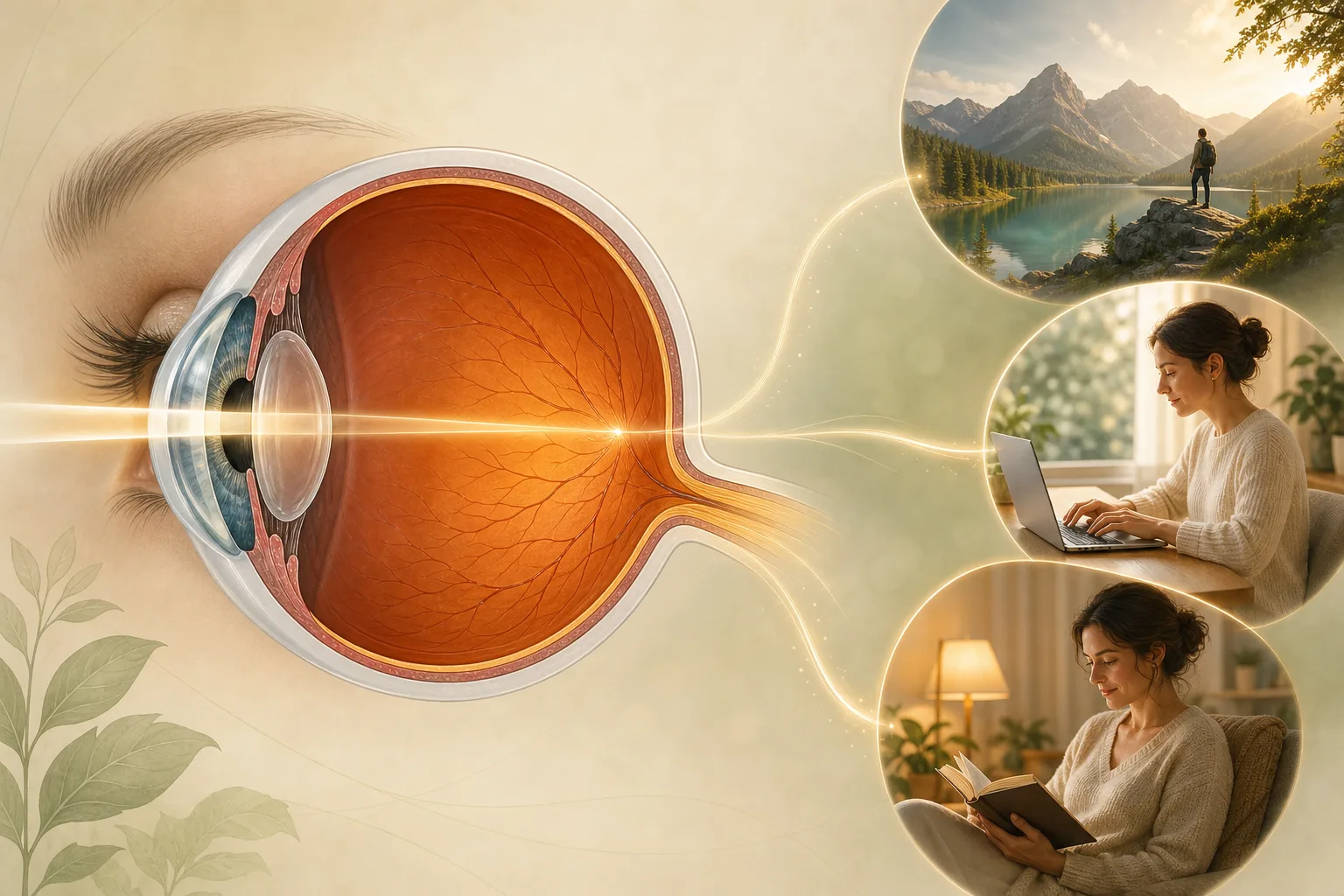
The foundations of visual science explained in plain language. Understanding how your eye works helps you understand what an IOL can and cannot do.
Explore vision topics
How the human eye works
A simple explanation of cornea, lens, retina, and how light becomes vision.
How the natural lens works
Your eye's natural autofocus: accommodation and why it changes with age.
Presbyopia
Why reading glasses become necessary after age 40 — and what it means for IOL choice.
Myopia and hyperopia
Nearsightedness, farsightedness, and how they affect your IOL calculations.
Astigmatism
When the cornea has different curvatures in different directions — and what can be done.
Contrast sensitivity
Why some people struggle to see in fog, dim light, or against similar backgrounds.
Visual acuity
What 20/20 really means — and why it is only part of the visual experience story.
Night vision
How the eye sees in low light, and why some IOLs affect it more than others.
Glare and halos
Rings around lights, light scatter, and positive dysphotopsia explained.
Why vision changes with age
The natural aging process of the eye and what can — and cannot — be restored with surgery.
Why glasses do not always give 20/20
Where optical correction stops — and how the retina, optic nerve and amblyopia can limit best-corrected vision.
New articles
All articles →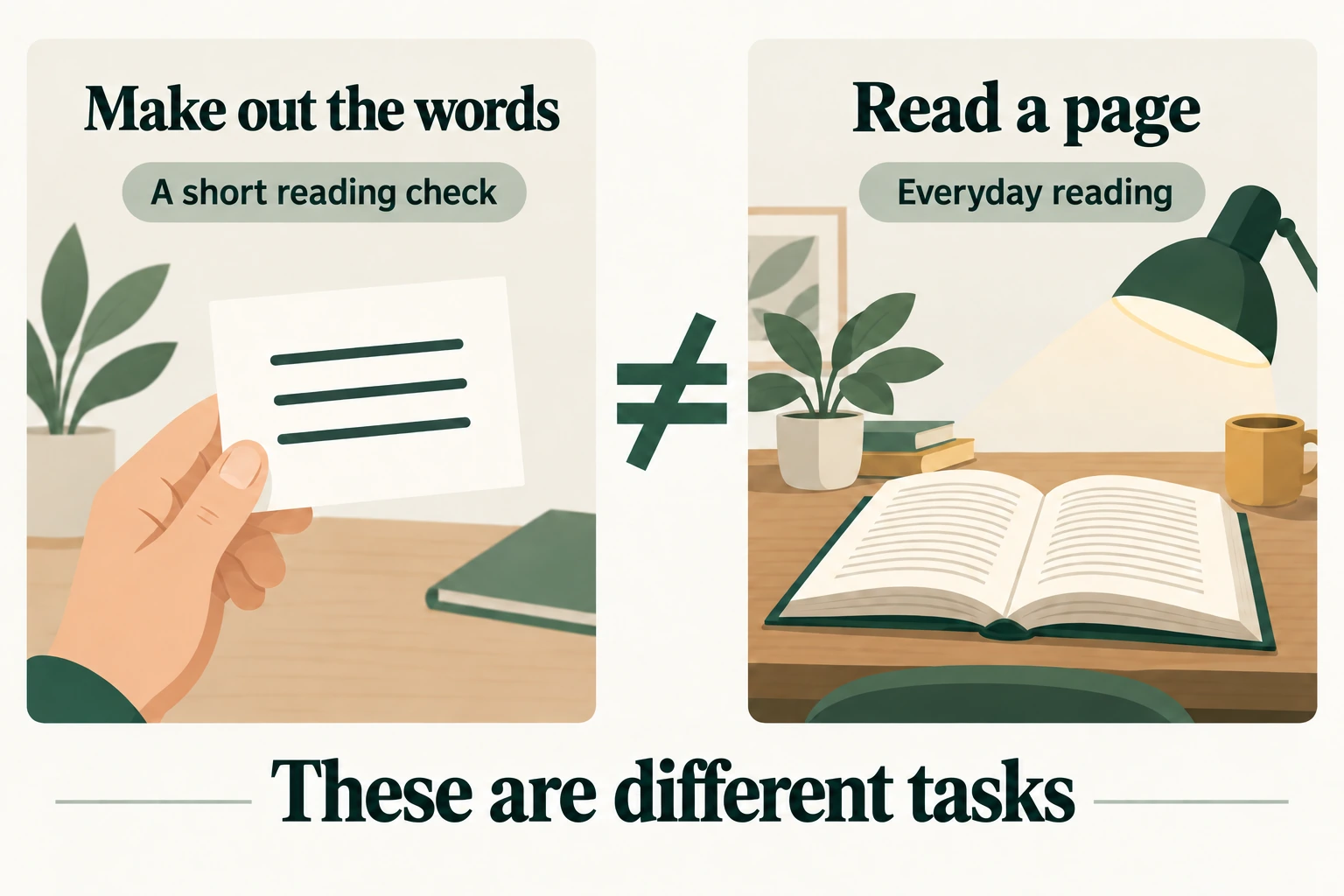
“But I Can Read It.” The Trap in Judging Reading Vision After Lens Replacement
Why reading small letters is not the same as reading comfortably. Acuity reserve, threefold print size, five chart lines and better questions before IOL surgery.
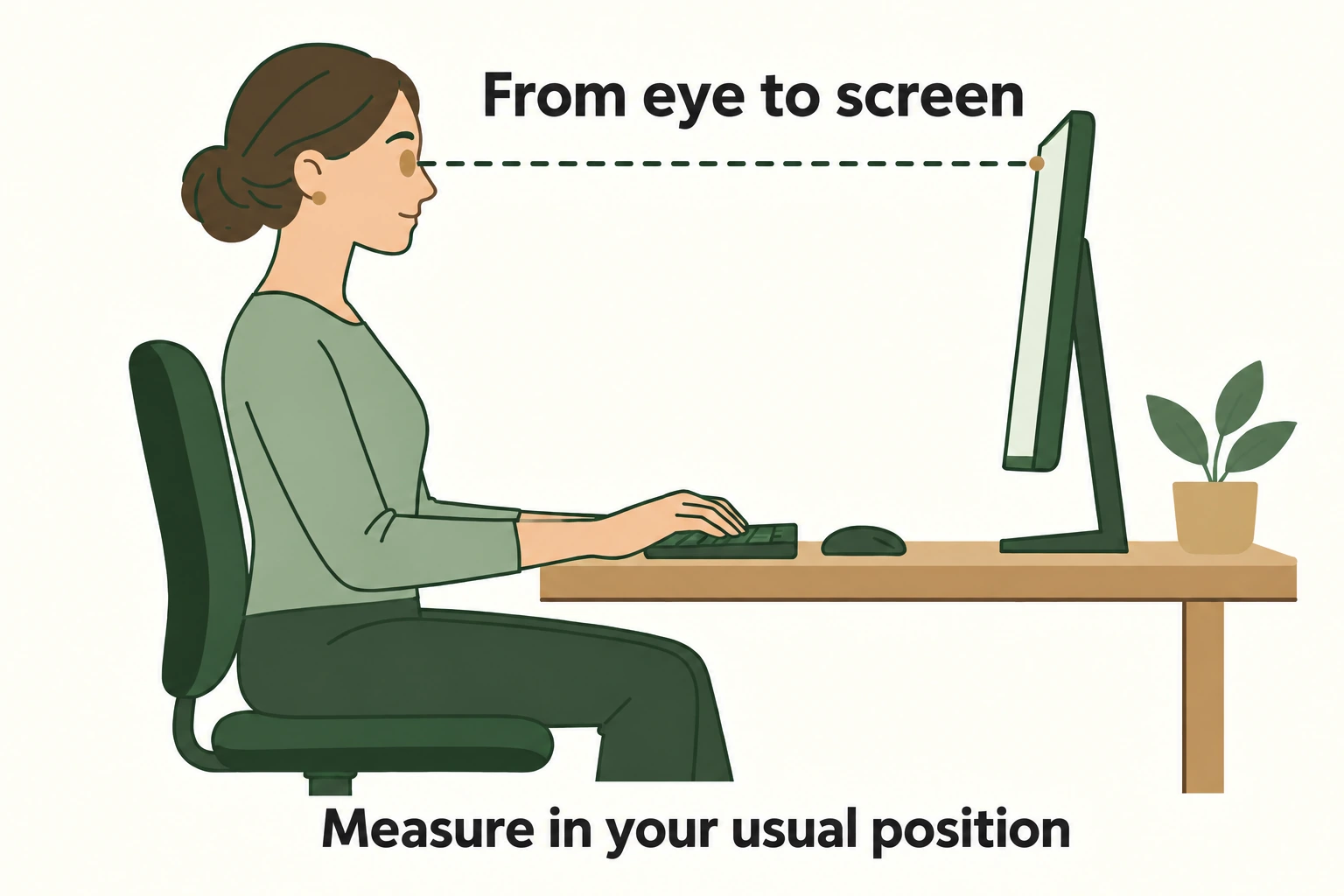
Best IOL for Computer Work? Start With Your Screen Distance
Measure your real screen distance before comparing IOLs. Understand computer glasses, intermediate vision and why reading a chart is not an entire working day.

Monofocal IOLs and Glasses After Cataract Surgery: The Honest Trade-Off
What distance-targeted monofocal IOLs usually mean for reading, computers and night vision, plus enhanced monofocal and monovision alternatives.